
At a glance
4–8 in.
Freshwater lakes, reservoirs, rivers or canals; depth use varies strongly by species, cover and water temperature.
Early morning and late afternoon are reliable starting periods; shade and current can extend activity through the day.
1 Caribbean area
Know it
Spot it, size it up and learn its habits.
- Identification
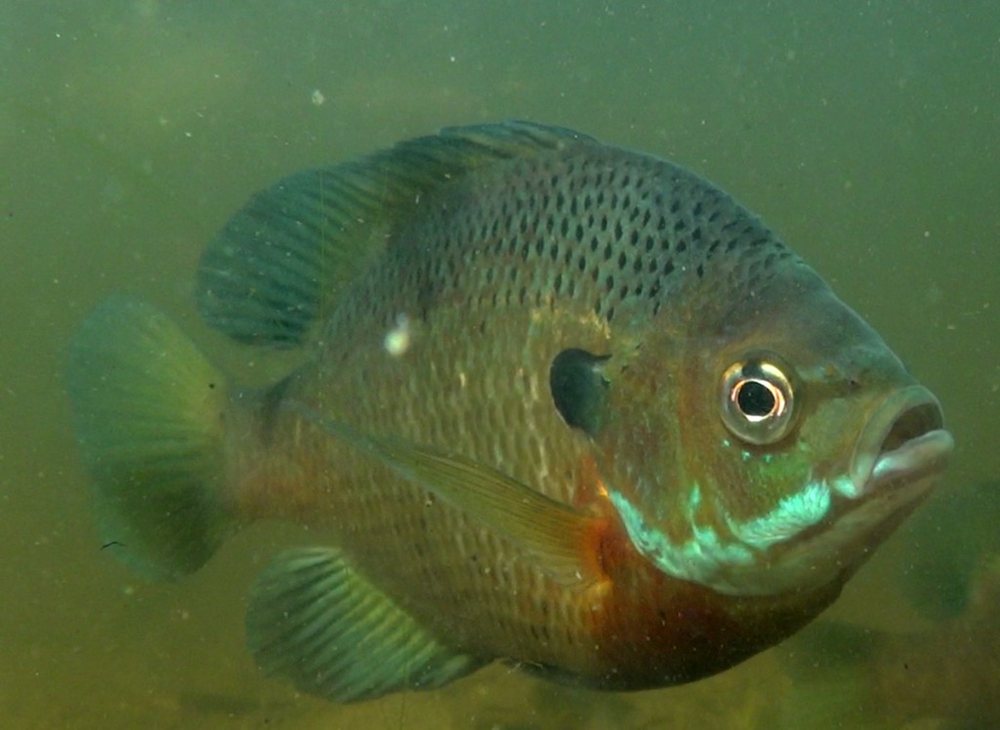
Bluegill (Lepomis macrochirus) — field identification starting point: a freshwater fish whose exact body pattern and fin shape should be confirmed against the scientific name and approved photo. Confirm the exact species against the approved photo and scientific-name biology reference.
- Typical size
4–8 in.
- Maximum size
About 16 in and 4.5 lb.
- Diet
diet varies by species and can include fishes, insects, crustaceans, algae, plants or detritus
- Behavior
Relates strongly to cover, current, water level and temperature; many feed along edges or structure.
Find it
Where, when and how deep to look.
- Where to find it
Found in Puerto Rico. Start in Puerto Rico reservoirs, rivers or canals where the species is documented, then focus on structure, shade, current breaks and bait activity appropriate to that fish. Habitat reference: lakes, reservoirs, rivers, canals and brackish transition zones depending on species
- Habitat
Habitat: not recorded yet.
- Depth
Freshwater lakes, reservoirs, rivers or canals; depth use varies strongly by species, cover and water temperature.
- Fishing depth
Start around shoreline cover, drop-offs, current breaks or visible bait and then adjust deeper as light/temperature changes.
- Fishing environments
Water: freshwater.
- Best season
Use local water level, clarity and temperature as the primary seasonal clues.
- Best time
Early morning and late afternoon are reliable starting periods; shade and current can extend activity through the day.
- Best tides
Tide is usually irrelevant inland; focus on river/canal current, inflows, wind-driven bait and water level.
- Best weather / conditions
Choose sea state, wind and visibility that let you hold position and handle the fish safely. Avoid treating rough weather as a feeding advantage.
Bait & gear
What to tie on and what to throw.
- Best bait
Crickets, worms and grass shrimp.
- Best artificial lures
Tiny jigs, beetle spins and small popping bugs.
- Tackle setup
Medium-light spinning rod, 8–10 lb line, 8–12 lb leader and a #4–1/0 hook or small jig is a versatile start.
- Hook size
About #6 to 2/0 covers many freshwater species; catfish and larger predators may need larger/stronger hooks.
- Line
4–12 lb line is a common light/medium start; use 15–30 lb around heavy cover or larger fish.
- Leader
Often 6–15 lb mono/fluoro; heavier leader is useful around abrasive cover or toothy fish.
BigJoe's setup for Bluegill
The freshwater setup BigJoe would take to the lake or river.
As an Amazon Associate, BigJoe earns from qualifying purchases. It costs you nothing extra and helps keep this guide free.
Catch it
Step by step, from first cast to landing.
Step-by-step: how to catch it
- Start where the species is most likely to occur: lakes, reservoirs, rivers, canals and brackish transition zones depending on species
- Rig for the habitat and current: Float rig, Carolina/bottom rig, jig head or simple lure setup depending on depth and species.
- Choose an offering that matches the fish and situation. Natural bait: Crickets, worms and grass shrimp. Lures/alternatives: Tiny jigs, beetle spins and small popping bugs.
- Fish it with this starting approach: Fish under a small bobber near docks, weeds and spawning beds. Presentation: Mealworms, crickets or pieces of earthworm can be presented under a float; larger sunfish may also be caught slightly deeper without a float in the cited regional guidance.
- Use timing and water movement as adjustments, not guarantees. Time: Early morning and late afternoon are reliable starting periods; shade and current can extend activity through the day. Tide/current: Tide is usually irrelevant inland; focus on river/canal current, inflows, wind-driven bait and water level.
- Fishing techniques
Fish under a small bobber near docks, weeds and spawning beds.
- Catch and release
Let it go quickly if you're not keeping it.
Clean & cook
Is it good to eat, and how to prepare it.
- Edibility
Excellent eating — one of the best-tasting catches in the region.
- Table quality
Top-quality table fare: firm, white, mild meat.
- Cleaning
After positive identification, current freshwater-rule confirmation and any water-quality advisory check, chill the fish promptly. Scale or skin as appropriate, gut or fillet with clean tools, remove bones/bloodline as desired and keep the edible portion cold.
- Cooking suggestions
If legally retained from water without an applicable consumption advisory, cook fish to 145°F (63°C) under FDA seafood guidance; flesh should be opaque and separate easily. Frying, baking, grilling or steaming can be chosen by cut and texture.
Stay safe & legal
Safety, rules and taking care of the fishery.
- Safety warnings
Use wet hands and pliers; catfish spines and some sharp fins can puncture skin. Follow local water-quality advisories before eating.
- Regulations
No species-specific size, bag or season limits are listed here.
- Conservation
Avoid needless kills and follow protected-species, area and season rules.
Where it's found & local rules
Tap an island for local spots and rules.
Sources & photo credits
Sources
- BigJoe Caribbean species list and local rule sources
- Puerto Rico rules — based on DRNA and NOAA sources
- Common Caribbean fishing know-how — a good starting point, not a legal rule.
- Smithsonian STRI Shorefishes of the Greater Caribbean — Caribbean biology reference system used for cross-checking.
- NOAA Fisheries — current U.S. Caribbean rules/closures · Puerto Rico DRNA — current territorial rules
- FishBase — Lepomis macrochirus species record
- FDA — Selecting and serving fresh and frozen seafood safely
- Texas Parks & Wildlife — Learn to Fish (Bluegill)
- Texas Parks & Wildlife — Fishing Inks Lake (Bluegill tactics)
Other names: No synonyms recorded.
Tips marked as common know-how come from everyday Caribbean fishing. They're a starting point — not a safety check, a permit or a guaranteed catch.