
Octopus & Squid
Caribbean armstripe octopod
Pulpo granuloso
Amphioctopus burryi
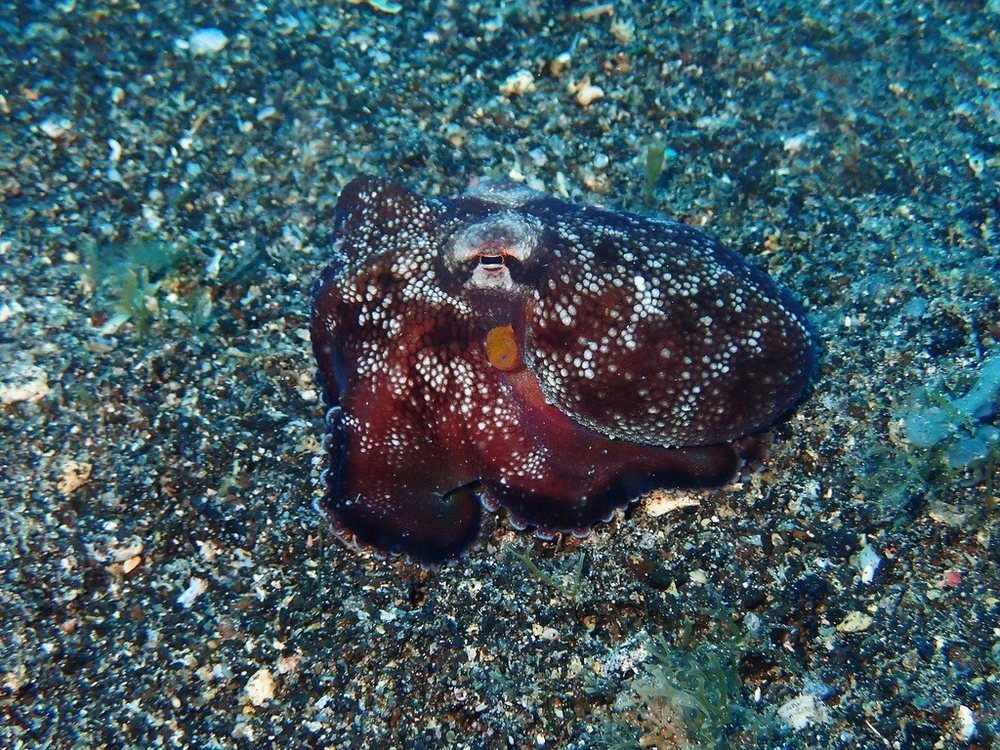
At a glance
Reef octopus commonly range from under 1 lb to several pounds depending on species and maturity.
Bottom-dwelling shellfish occur on sand, mud, seagrass, reef or hard substrate depending on species.
Use daylight/visibility and safe tide conditions unless local rules and experience support another approach.
6 Caribbean areas
Know it
Spot it, size it up and learn its habits.
- Identification
Caribbean armstripe octopod (Amphioctopus burryi) — field identification starting point: a soft-bodied cephalopod with eight arms, suckers and no external shell. Confirm the exact species against the approved photo and scientific-name biology reference.
- Typical size
Reef octopus commonly range from under 1 lb to several pounds depending on species and maturity.
- Maximum size
Large adults can reach several pounds; arm span varies widely.
- Diet
Many bivalves filter plankton; grazing snails eat algae/biofilm, while some mollusks are predators/scavengers.
- Behavior
Usually attached, buried or slow-moving on the bottom; distribution follows substrate, salinity and water quality.
Find it
Where, when and how deep to look.
- Where to find it
Found in Puerto Rico. Start in the documented habitat and substrate for this species, then narrow the search using depth, current, structure and food activity. Habitat reference: Habitat: sand bottom and seagrass.
- Habitat
Habitat: sand bottom and seagrass.
- Depth
Bottom-dwelling shellfish occur on sand, mud, seagrass, reef or hard substrate depending on species.
- Fishing depth
Search only legal collection areas and depths where the bottom can be inspected safely; closures and sanitary status matter more than a fishing depth number.
- Fishing environments
Water: marine. Habitat: sand bottom and seagrass.
- Best season
Collect only during open legal/sanitary periods.
- Best time
Use daylight/visibility and safe tide conditions unless local rules and experience support another approach.
- Best tides
Low water or low current can improve access/visibility, but never enter exposed reef, surf or mudflat conditions unsafely.
- Best weather / conditions
Choose sea state, wind and visibility that let you hold position and handle the fish safely. Avoid treating rough weather as a feeding advantage.
Bait & gear
What to tie on and what to throw.
- Best bait
Not a standard hook-and-line recommendation; octopus may investigate crabs/shellfish, but collection methods and rules come first.
- Best artificial lures
Not applicable.
- Tackle setup
Mask/light/gloves, lawful collection tool, secure container and current local rules.
- Hook size
Do not assume hooks are a lawful/appropriate octopus method; Sea Grant Puerto Rico notes pole spear use by some fishers, but local rules must be checked.
- Line
Not applicable.
- Leader
Not applicable.
Catch it
Step by step, from first cast to landing.
Step-by-step: how to catch it
- Start where the species is most likely to occur: Habitat: sand bottom and seagrass.
- Rig for the habitat and current: Use only the legal collection method for the exact area; do not improvise gear that damages reef habitat.
- Choose an offering that matches the fish and situation. Natural bait: Not a standard hook-and-line recommendation; octopus may investigate crabs/shellfish, but collection methods and rules come first. Lures/alternatives: Not applicable.
- Fish it with this starting approach: Search crevices/reef edges carefully, confirm legality and use a controlled lawful collection method without breaking coral or rock. Presentation: Collection rather than presentation: avoid breaking habitat and return undersized/prohibited animals immediately.
- Use timing and water movement as adjustments, not guarantees. Time: Use daylight/visibility and safe tide conditions unless local rules and experience support another approach. Tide/current: Low water or low current can improve access/visibility, but never enter exposed reef, surf or mudflat conditions unsafely.
- Fishing techniques
Search crevices/reef edges carefully, confirm legality and use a controlled lawful collection method without breaking coral or rock.
- Catch and release
Let it go quickly if you're not keeping it.
Clean & cook
Is it good to eat, and how to prepare it.
- Edibility
BigJoe does not classify Caribbean armstripe octopod as a routine food species from the current source set. That is not a claim that it is poisonous; before eating, confirm exact identification, lawful retention, documented local food use and current public-health advisories.
- Table quality
Not a common food fish — most anglers release it.
- Cleaning
Safety first: Avoid direct handling around the arms and mouth; octopus bites can puncture and bleed. After legal-retention and food-use confirmation, chill promptly. For cephalopods, remove viscera and beak; for squid also remove the internal pen and skin if desired. Rinse with clean water, portion on a sanitized surface and refrigerate immediately.
- Cooking suggestions
Cook cephalopods thoroughly unless using a validated raw-seafood control program. Quick high heat keeps squid tender, while octopus is often tenderized and then simmered, braised or grilled; exact technique is culinary, not a safety substitute.
Stay safe & legal
Safety, rules and taking care of the fishery.
- Safety warnings
Avoid direct handling around the arms and mouth; octopus bites can puncture and bleed.
- Regulations
No species-specific size, bag or season limits are listed here.
- Conservation
Avoid needless kills and follow protected-species, area and season rules.
Where it's found & local rules
Tap an island for local spots and rules.
Sources & photo credits
Sources
- BigJoe Caribbean species list and local rule sources
- Puerto Rico rules — based on DRNA and NOAA sources
- Common Caribbean fishing know-how — a good starting point, not a legal rule.
- Smithsonian STRI Shorefishes of the Greater Caribbean — Caribbean biology reference system used for cross-checking.
- NOAA Fisheries — current U.S. Caribbean rules/closures · Puerto Rico DRNA — current territorial rules
- SeaLifeBase — Amphioctopus burryi species record
- FDA — Selecting and serving fresh and frozen seafood safely
- NOAA marine injury guidance — bites and octopus
Other names: Octopus burryi
Tips marked as common know-how come from everyday Caribbean fishing. They're a starting point — not a safety check, a permit or a guaranteed catch.