
At a glance
Many Caribbean parrotfish are commonly about 8–24 in, with some species much larger.
Commonly associated with reef, rubble, seagrass or nearby bottom habitat; exact depth varies by species and life stage.
No target time is recommended; release any incidental capture promptly.
11 Caribbean areas
Know it
Spot it, size it up and learn its habits.
- Identification
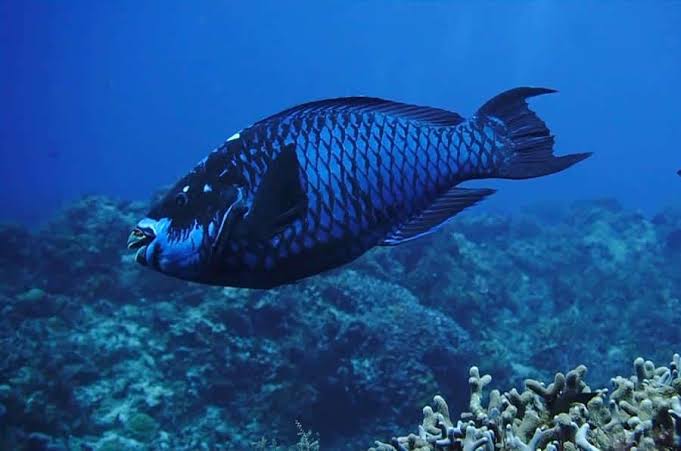
Midnight parrotfish (Scarus coelestinus) — field identification starting point: a robust reef fish with fused beak-like teeth and often striking color changes between life phases. Confirm the exact species against the approved photo and scientific-name biology reference.
- Typical size
Many Caribbean parrotfish are commonly about 8–24 in, with some species much larger.
- Maximum size
Large parrotfish can exceed 3 ft.
- Diet
Primarily algae, seagrass, detritus or benthic material depending on species; these fish are important reef grazers.
- Behavior
Commonly grazes reef/rock/seagrass surfaces and moves between feeding and shelter areas.
Find it
Where, when and how deep to look.
- Where to find it
Found in Puerto Rico. Start on reef edges, ledges, rocky bottom, patch reefs and nearby sand/grass transitions; work the side with moving water and bait. Habitat reference: Habitat: reef.
- Habitat
Habitat: reef.
- Depth
Commonly associated with reef, rubble, seagrass or nearby bottom habitat; exact depth varies by species and life stage.
- Fishing depth
Release-first species on this BigJoe guide: do not target it for harvest. If caught incidentally, release promptly in the water or with minimal air exposure.
- Fishing environments
Water: marine. Habitat: reef.
- Best season
No directed season is recommended; check the current legal status before every trip.
- Best time
No target time is recommended; release any incidental capture promptly.
- Best tides
No target tide is recommended; choose conditions that allow safe handling and release.
- Best weather / conditions
Choose sea state, wind and visibility that let you hold position and handle the fish safely. Avoid treating rough weather as a feeding advantage.
Bait & gear
What to tie on and what to throw.
- Best bait
No harvest-targeting bait recommendation is provided. Incidental captures should be released promptly.
- Best artificial lures
No directed lure recommendation on a release-only page; avoid intentionally targeting the fish unless current rules expressly allow the activity.
- Tackle setup
Release kit first: appropriate rod/reel, strong line, dehooker, long pliers/cutters and a plan to keep handling time minimal.
- Hook size
If an incidental hookup occurs, use strong release-friendly terminal tackle and cut the leader near the hook if removal would cause more injury.
- Line
Use tackle strong enough to shorten any incidental fight and support a quick release.
- Leader
Use an abrasion-resistant leader that can be cut quickly if dehooking is unsafe.
Catch it
Step by step, from first cast to landing.
Step-by-step: how to catch it
- Start where the species is most likely to occur: Habitat: reef.
- Rig for the habitat and current: No harvest-targeting rig is recommended. Keep dehooker and cutters ready for incidental release.
- Choose an offering that matches the fish and situation. Natural bait: No harvest-targeting bait recommendation is provided. Incidental captures should be released promptly. Lures/alternatives: No directed lure recommendation on a release-only page; avoid intentionally targeting the fish unless current rules expressly allow the activity.
- Fish it with this starting approach: Release-first guidance only: identify, minimize fight/handling, dehook in the water when practical and release promptly. Presentation: No directed presentation is recommended on a release-only page.
- Use timing and water movement as adjustments, not guarantees. Time: No target time is recommended; release any incidental capture promptly. Tide/current: No target tide is recommended; choose conditions that allow safe handling and release.
- Fishing techniques
Release-first guidance only: identify, minimize fight/handling, dehook in the water when practical and release promptly.
- Catch and release
Let it go quickly if you're not keeping it.
Clean & cook
Is it good to eat, and how to prepare it.
- Edibility
Do not keep — this species is protected in Florida and/or U.S. federal waters, and in many Caribbean countries. Release it quickly. Parrotfish keep reefs healthy and are protected or limited in several places (e.g., Bonaire, the USVI and Puerto Rico have rules) — many anglers release them.
- Table quality
Not for the table — release it.
- Cleaning
Safety first: FOOD TOXIN RISK — this fish belongs to a group associated with ciguatera in tropical/Caribbean waters. Risk varies by location, species and fish; the toxin cannot be detected by appearance, taste or smell and cooking does not destroy it. Ice it right away. Use a clean board and sharp knife; scale or skin only when appropriate, remove the viscera or fillet cleanly, trim damaged tissue/bloodline as desired, minimize warm-water exposure, and keep the edible portion cold. If the fish carries venomous spines, dangerous teeth or a toxin advisory, follow the safety warning before cleaning.
- Cooking suggestions
For routine cooked preparation, FDA seafood guidance uses 145°F (63°C) as the safe internal-temperature target for fish; flesh should be opaque and separate easily with a fork. Grilling, baking, broiling, steaming or pan-cooking can all work after the fish is positively identified, legally retained and cleared for applicable toxin/mercury advisories.
Stay safe & legal
Safety, rules and taking care of the fishery.
- Safety warnings
FOOD TOXIN RISK — this fish belongs to a group associated with ciguatera in tropical/Caribbean waters. Risk varies by location, species and fish; the toxin cannot be detected by appearance, taste or smell and cooking does not destroy it.
- Regulations
Rules: Blue, midnight and rainbow parrotfish: Do not target or possess; release incidental catches promptly with minimal harm.
- Conservation
Avoid needless kills and follow protected-species, area and season rules.
Where it's found & local rules
Tap an island for local spots and rules.
Sources & photo credits
Sources
- BigJoe Caribbean species list and local rule sources
- Puerto Rico rules — based on DRNA and NOAA sources
- Common Caribbean fishing know-how — a good starting point, not a legal rule.
- Smithsonian STRI Shorefishes of the Greater Caribbean — Caribbean biology reference system used for cross-checking.
- NOAA Fisheries — current U.S. Caribbean rules/closures · Puerto Rico DRNA — current territorial rules
- FishBase — Scarus coelestinus species record
- FDA — Selecting and serving fresh and frozen seafood safely
- CDC Yellow Book — Ciguatera fish poisoning
- CDC — Seafood poisoning / ciguatera
- FDA — Ciguatera poisoning reports and associated fish groups
Other names: No synonyms recorded.
Tips marked as common know-how come from everyday Caribbean fishing. They're a starting point — not a safety check, a permit or a guaranteed catch.