
At a glance
Mojarras are usually small to medium coastal fish, commonly about 4–14 in.
Commonly associated with reef, rubble, seagrass or nearby bottom habitat; exact depth varies by species and life stage.
Early/late light and moving water are good starting periods; some reef species feed well through the day or after dark.
18 Caribbean areas
Know it
Spot it, size it up and learn its habits.
- Identification
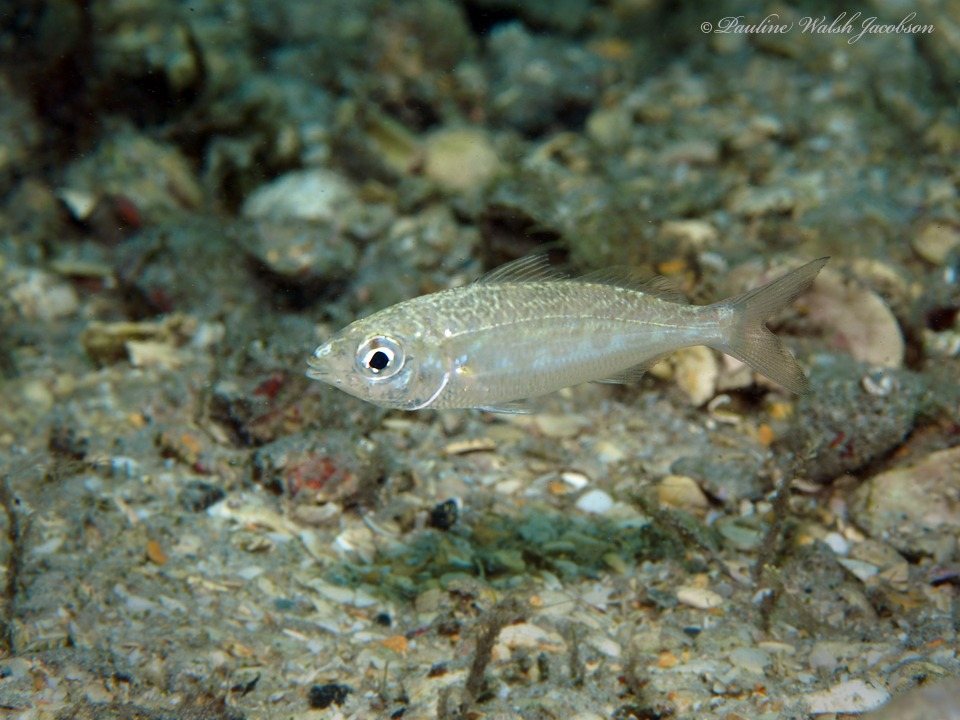
Mottled mojarra (Ulaema lefroyi) — field identification starting point: a silvery, laterally compressed coastal fish with a highly protrusible mouth used to feed on small bottom prey. Confirm the exact species against the approved photo and scientific-name biology reference.
- Typical size
Mojarras are usually small to medium coastal fish, commonly about 4–14 in.
- Maximum size
Large mojarra species can approach 18 in.
- Diet
Diet can include small crustaceans, worms, mollusks, plankton, algae or small fish depending on the species.
- Behavior
Often uses reef edges, holes, rubble, seagrass or nearby sand for feeding and shelter.
Find it
Where, when and how deep to look.
- Where to find it
Found in Puerto Rico. Start in coastal channels, flats, beaches, sand/grass edges, passes or estuary mouths that match the species habitat, especially where current concentrates bait. Habitat reference: Habitat: sand bottom and estuary.
- Habitat
Habitat: sand bottom and estuary.
- Depth
Commonly associated with reef, rubble, seagrass or nearby bottom habitat; exact depth varies by species and life stage.
- Fishing depth
Start near the bottom or reef edge where the species is observed; adjust until bites show the active level.
- Fishing environments
Water: marine. Habitat: sand bottom and estuary.
- Best season
Fish legal open periods and favorable sea conditions; no single month works for every reef species.
- Best time
Early/late light and moving water are good starting periods; some reef species feed well through the day or after dark.
- Best tides
Moderate moving water is often productive; excessive current may require more weight or a sheltered edge.
- Best weather / conditions
Choose sea state, wind and visibility that let you hold position and handle the fish safely. Avoid treating rough weather as a feeding advantage.
Bait & gear
What to tie on and what to throw.
- Best bait
Small pieces of shrimp, squid, clam or cut bait are common starting baits for many reef species.
- Best artificial lures
Small jigs, soft plastics, spoons or micro-jigs are common choices; use the smallest lure that reaches the zone.
- Tackle setup
Start with light/medium spinning gear, 10–15 lb line, 15–25 lb leader and a #2–1/0 hook or small jig.
- Hook size
About #4 to 2/0 is a practical starting range for small/medium reef fish; scale to mouth size and bait.
- Line
8–20 lb line is a common light-reef starting range; increase around sharp structure.
- Leader
12–30 lb abrasion-resistant mono/fluorocarbon is a common start.
BigJoe's setup for Mottled mojarra
Ultralight gear BigJoe would use for small, scrappy fish.
As an Amazon Associate, BigJoe earns from qualifying purchases. It costs you nothing extra and helps keep this guide free.
Catch it
Step by step, from first cast to landing.
Step-by-step: how to catch it
- Start where the species is most likely to occur: Habitat: sand bottom and estuary.
- Rig for the habitat and current: Simple dropper, knocker or light jig rig; keep hardware small and use only enough weight to maintain contact.
- Choose an offering that matches the fish and situation. Natural bait: Small pieces of shrimp, squid, clam or cut bait are common starting baits for many reef species. Lures/alternatives: Small jigs, soft plastics, spoons or micro-jigs are common choices; use the smallest lure that reaches the zone.
- Fish it with this starting approach: Bottom-fish or jig around reef edges and sandy pockets; keep the bait near the active zone and move if small fish strip the bait instantly. Presentation: Use small natural offerings and subtle jig movements; pause often near cover.
- Use timing and water movement as adjustments, not guarantees. Time: Early/late light and moving water are good starting periods; some reef species feed well through the day or after dark. Tide/current: Moderate moving water is often productive; excessive current may require more weight or a sheltered edge.
- Fishing techniques
Bottom-fish or jig around reef edges and sandy pockets; keep the bait near the active zone and move if small fish strip the bait instantly.
- Catch and release
Let it go quickly if you're not keeping it.
Clean & cook
Is it good to eat, and how to prepare it.
- Edibility
Edible, but small, bony or strong-flavored — many anglers use it for bait or release it.
- Table quality
Fair table fare.
- Cleaning
Ice it right away. Use a clean board and sharp knife; scale or skin only when appropriate, remove the viscera or fillet cleanly, trim damaged tissue/bloodline as desired, minimize warm-water exposure, and keep the edible portion cold. If the fish carries venomous spines, dangerous teeth or a toxin advisory, follow the safety warning before cleaning.
- Cooking suggestions
For routine cooked preparation, FDA seafood guidance uses 145°F (63°C) as the safe internal-temperature target for fish; flesh should be opaque and separate easily with a fork. Grilling, baking, broiling, steaming or pan-cooking can all work after the fish is positively identified, legally retained and cleared for applicable toxin/mercury advisories.
Stay safe & legal
Safety, rules and taking care of the fishery.
- Safety warnings
Use a dehooker/pliers and watch for dorsal/anal spines and sharp gill covers. Do not squeeze the fish around the abdomen.
- Regulations
No species-specific size, bag or season limits are listed here.
- Conservation
Avoid needless kills and follow protected-species, area and season rules.
Where it's found & local rules
Tap an island for local spots and rules.
Sources & photo credits
Sources
- BigJoe Caribbean species list and local rule sources
- Puerto Rico rules — based on DRNA and NOAA sources
- Common Caribbean fishing know-how — a good starting point, not a legal rule.
- Smithsonian STRI Shorefishes of the Greater Caribbean — Caribbean biology reference system used for cross-checking.
- NOAA Fisheries — current U.S. Caribbean rules/closures · Puerto Rico DRNA — current territorial rules
- FishBase — Ulaema lefroyi species record
- FDA — Selecting and serving fresh and frozen seafood safely
Other names: Eucinostomus lefroyi
Tips marked as common know-how come from everyday Caribbean fishing. They're a starting point — not a safety check, a permit or a guaranteed catch.