
At a glance
Many Caribbean parrotfish are commonly about 8–24 in, with some species much larger.
Commonly associated with reef, rubble, seagrass or nearby bottom habitat; exact depth varies by species and life stage.
Early/late light and moving water are good starting periods; some reef species feed well through the day or after dark.
29 Caribbean areas
Know it
Spot it, size it up and learn its habits.
- Identification
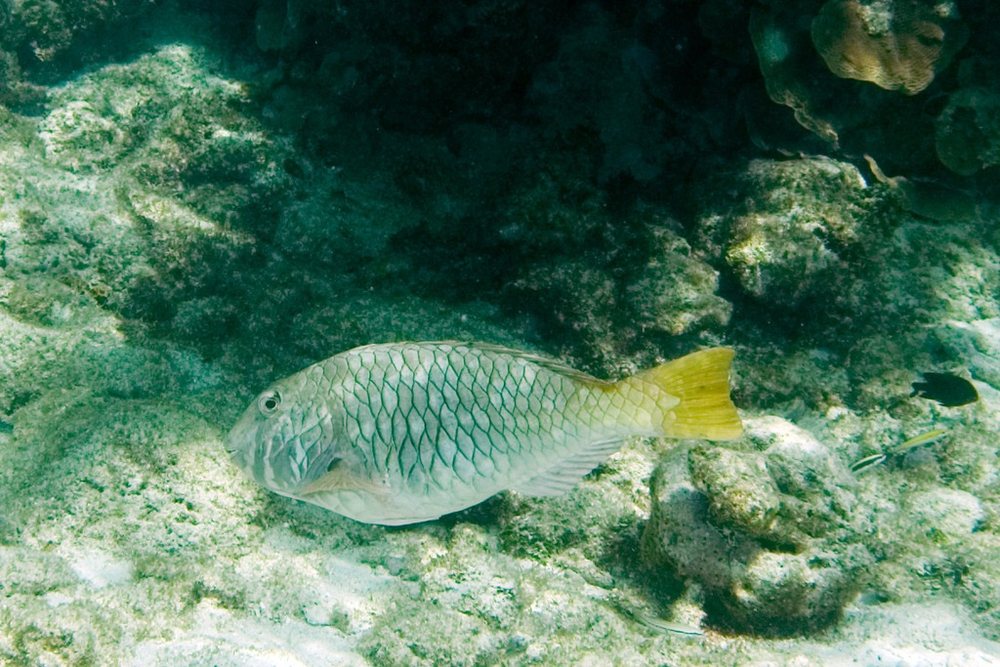
Redfin parrotfish (Sparisoma rubripinne) — field identification starting point: a robust reef fish with fused beak-like teeth and often striking color changes between life phases. Confirm the exact species against the approved photo and scientific-name biology reference.
- Typical size
Many Caribbean parrotfish are commonly about 8–24 in, with some species much larger.
- Maximum size
Large parrotfish can exceed 3 ft.
- Diet
Primarily algae, seagrass, detritus or benthic material depending on species; these fish are important reef grazers.
- Behavior
Commonly grazes reef/rock/seagrass surfaces and moves between feeding and shelter areas.
Find it
Where, when and how deep to look.
- Where to find it
Found in Puerto Rico. Start on reef edges, ledges, rocky bottom, patch reefs and nearby sand/grass transitions; work the side with moving water and bait. Habitat reference: Habitat: reef, seagrass and coastal waters.
- Habitat
Habitat: reef, seagrass and coastal waters.
- Depth
Commonly associated with reef, rubble, seagrass or nearby bottom habitat; exact depth varies by species and life stage.
- Fishing depth
Start near the bottom or reef edge where the species is observed; adjust until bites show the active level.
- Fishing environments
Water: marine. Habitat: reef, seagrass and coastal waters.
- Best season
Fish legal open periods and favorable sea conditions; no single month works for every reef species.
- Best time
Early/late light and moving water are good starting periods; some reef species feed well through the day or after dark.
- Best tides
Moderate moving water is often productive; excessive current may require more weight or a sheltered edge.
- Best weather / conditions
Choose sea state, wind and visibility that let you hold position and handle the fish safely. Avoid treating rough weather as a feeding advantage.
Bait & gear
What to tie on and what to throw.
- Best bait
Plant material is part of the natural diet for many members, but BigJoe does not promote targeted harvest where parrotfish/surgeonfish protections or local restrictions may apply.
- Best artificial lures
Small flies/jigs may take some species incidentally, but a targeted lure recommendation is secondary to species identification and local rules.
- Tackle setup
Start with light/medium spinning gear, 10–15 lb line, 15–25 lb leader and a #2–1/0 hook or small jig.
- Hook size
About #4 to 2/0 is a practical starting range for small/medium reef fish; scale to mouth size and bait.
- Line
8–20 lb line is a common light-reef starting range; increase around sharp structure.
- Leader
12–30 lb abrasion-resistant mono/fluorocarbon is a common start.
Catch it
Step by step, from first cast to landing.
Step-by-step: how to catch it
- Start where the species is most likely to occur: Habitat: reef, seagrass and coastal waters.
- Rig for the habitat and current: Simple dropper, knocker or light jig rig; keep hardware small and use only enough weight to maintain contact.
- Choose an offering that matches the fish and situation. Natural bait: Plant material is part of the natural diet for many members, but BigJoe does not promote targeted harvest where parrotfish/surgeonfish protections or local restrictions may apply. Lures/alternatives: Small flies/jigs may take some species incidentally, but a targeted lure recommendation is secondary to species identification and local rules.
- Fish it with this starting approach: Observe/identify first. If legal and intentionally fished, use light tackle and minimal-impact methods; release protected or uncertain species immediately. Presentation: Use small natural offerings and subtle jig movements; pause often near cover.
- Use timing and water movement as adjustments, not guarantees. Time: Early/late light and moving water are good starting periods; some reef species feed well through the day or after dark. Tide/current: Moderate moving water is often productive; excessive current may require more weight or a sheltered edge.
- Fishing techniques
Observe/identify first. If legal and intentionally fished, use light tackle and minimal-impact methods; release protected or uncertain species immediately.
- Catch and release
Let it go quickly if you're not keeping it.
Clean & cook
Is it good to eat, and how to prepare it.
- Edibility
Usually released — a sport fish more than a food fish. Parrotfish keep reefs healthy and are protected or limited in several places (e.g., Bonaire, the USVI and Puerto Rico have rules) — many anglers release them.
- Table quality
Most anglers don't keep it for the table.
- Cleaning
Safety first: FOOD TOXIN RISK — this fish belongs to a group associated with ciguatera in tropical/Caribbean waters. Risk varies by location, species and fish; the toxin cannot be detected by appearance, taste or smell and cooking does not destroy it. Ice it right away. Use a clean board and sharp knife; scale or skin only when appropriate, remove the viscera or fillet cleanly, trim damaged tissue/bloodline as desired, minimize warm-water exposure, and keep the edible portion cold. If the fish carries venomous spines, dangerous teeth or a toxin advisory, follow the safety warning before cleaning.
- Cooking suggestions
For routine cooked preparation, FDA seafood guidance uses 145°F (63°C) as the safe internal-temperature target for fish; flesh should be opaque and separate easily with a fork. Grilling, baking, broiling, steaming or pan-cooking can all work after the fish is positively identified, legally retained and cleared for applicable toxin/mercury advisories.
Stay safe & legal
Safety, rules and taking care of the fishery.
- Safety warnings
FOOD TOXIN RISK — this fish belongs to a group associated with ciguatera in tropical/Caribbean waters. Risk varies by location, species and fish; the toxin cannot be detected by appearance, taste or smell and cooking does not destroy it.
- Regulations
No species-specific size, bag or season limits are listed here.
- Conservation
Avoid needless kills and follow protected-species, area and season rules.
Where it's found & local rules
Tap an island for local spots and rules.
Sources & photo credits
Sources
- BigJoe Caribbean species list and local rule sources
- Puerto Rico rules — based on DRNA and NOAA sources
- Common Caribbean fishing know-how — a good starting point, not a legal rule.
- Smithsonian STRI Shorefishes of the Greater Caribbean — Caribbean biology reference system used for cross-checking.
- NOAA Fisheries — current U.S. Caribbean rules/closures · Puerto Rico DRNA — current territorial rules
- FishBase — Sparisoma rubripinne species record
- FDA — Selecting and serving fresh and frozen seafood safely
- CDC Yellow Book — Ciguatera fish poisoning
- CDC — Seafood poisoning / ciguatera
- FDA — Ciguatera poisoning reports and associated fish groups
Other names: No synonyms recorded.
Tips marked as common know-how come from everyday Caribbean fishing. They're a starting point — not a safety check, a permit or a guaranteed catch.