
Shrimp & Prawns
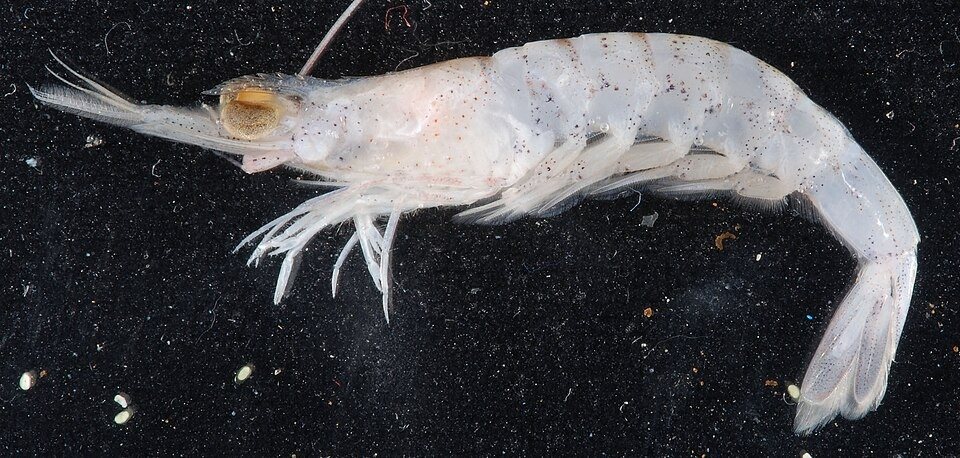
Roughneck shrimp
Camarón fijador
Rimapenaeus constrictus
At a glance
Most shrimp/prawns in this guide are measured in inches, commonly about 3–8 in depending on species.
Bottom-dwelling shellfish occur on sand, mud, seagrass, reef or hard substrate depending on species.
Use daylight/visibility and safe tide conditions unless local rules and experience support another approach.
5 Caribbean areas
Know it
Spot it, size it up and learn its habits.
- Identification
Roughneck shrimp (Rimapenaeus constrictus) — field identification starting point: a segmented crustacean with a rostrum, long antennae, walking legs and a muscular abdomen. Confirm the exact species against the approved photo and scientific-name biology reference.
- Typical size
Most shrimp/prawns in this guide are measured in inches, commonly about 3–8 in depending on species.
- Maximum size
Large prawns/shrimp can approach or exceed 10 in depending on species.
- Diet
Many bivalves filter plankton; grazing snails eat algae/biofilm, while some mollusks are predators/scavengers.
- Behavior
Usually attached, buried or slow-moving on the bottom; distribution follows substrate, salinity and water quality.
Find it
Where, when and how deep to look.
- Where to find it
Found in Puerto Rico. Start in the documented habitat and substrate for this species, then narrow the search using depth, current, structure and food activity. Habitat reference: Habitat: sand bottom and mud bottom.
- Habitat
Habitat: sand bottom and mud bottom.
- Depth
Bottom-dwelling shellfish occur on sand, mud, seagrass, reef or hard substrate depending on species.
- Fishing depth
Search only legal collection areas and depths where the bottom can be inspected safely; closures and sanitary status matter more than a fishing depth number.
- Fishing environments
Water: marine. Habitat: sand bottom and mud bottom.
- Best season
Collect only during open legal/sanitary periods.
- Best time
Use daylight/visibility and safe tide conditions unless local rules and experience support another approach.
- Best tides
Low water or low current can improve access/visibility, but never enter exposed reef, surf or mudflat conditions unsafely.
- Best weather / conditions
Choose sea state, wind and visibility that let you hold position and handle the fish safely. Avoid treating rough weather as a feeding advantage.
Bait & gear
What to tie on and what to throw.
- Best bait
Bait is method-dependent; small bait pieces may be used in traps where legal, while nets generally rely on locating shrimp concentrations.
- Best artificial lures
Not applicable.
- Tackle setup
Legal net/trap gear, light, gloves, measuring/sorting tools if required and plenty of ice.
- Hook size
Not normally a hook-and-line target.
- Line
Not applicable.
- Leader
Not applicable.
BigJoe's setup for Roughneck shrimp
What BigJoe would use to catch shrimp.
As an Amazon Associate, BigJoe earns from qualifying purchases. It costs you nothing extra and helps keep this guide free.
Catch it
Step by step, from first cast to landing.
Step-by-step: how to catch it
- Start where the species is most likely to occur: Habitat: sand bottom and mud bottom.
- Rig for the habitat and current: Use only lawful dip/cast/trap gear for the exact water and species.
- Choose an offering that matches the fish and situation. Natural bait: Bait is method-dependent; small bait pieces may be used in traps where legal, while nets generally rely on locating shrimp concentrations. Lures/alternatives: Not applicable.
- Fish it with this starting approach: Locate shrimp in legal habitat, use the permitted net/trap method, and sort/ice the catch quickly. Presentation: Collection rather than presentation: avoid breaking habitat and return undersized/prohibited animals immediately.
- Use timing and water movement as adjustments, not guarantees. Time: Use daylight/visibility and safe tide conditions unless local rules and experience support another approach. Tide/current: Low water or low current can improve access/visibility, but never enter exposed reef, surf or mudflat conditions unsafely.
- Fishing techniques
Locate shrimp in legal habitat, use the permitted net/trap method, and sort/ice the catch quickly.
- Catch and release
Let it go quickly if you're not keeping it.
Clean & cook
Is it good to eat, and how to prepare it.
- Edibility
Roughneck shrimp has documented food use in the BigJoe catalog/source set. Freshness matters — keep it on ice, and watch for any toxin or mercury advisory.
- Table quality
People do eat this species. We don't have taste or table-quality notes yet.
- Cleaning
Keep the catch cold and clean. Rinse with clean water, remove the head/shell if desired, devein when appropriate, and return cleaned shrimp to ice or refrigeration immediately.
- Cooking suggestions
Cook shrimp until the flesh becomes firm, pearly and opaque. Do not rely on color alone if the product is unusually large or prepared in a sauce; keep raw and cooked seafood separate.
Clean It & Choose Your Cut
Food safety: Food safety: keep seafood cold, prevent cross-contamination, wash hands and tools, and refrigerate promptly.
Recommended cuts
- Peeled and deveined
- Shell-on
- Butterflied
Cleaning steps
- Keep shrimp or prawns cold.
- Rinse away visible debris and drain.
- Remove the head if desired, peel according to the recipe, and leave the tail on or off as preferred.
- Make a shallow cut along the back and remove the visible digestive tract.
- Pat dry and keep chilled until cooking.
Do not leave cleaned shrimp at room temperature.
How would you like it cooked?
Choose a style and open the full recipe.
Stay safe & legal
Safety, rules and taking care of the fishery.
- Safety warnings
Spines/shells can puncture skin; chill the catch quickly and avoid cross-contamination.
- Regulations
No species-specific size, bag or season limits are listed here.
- Conservation
Avoid needless kills and follow protected-species, area and season rules.
Where it's found & local rules
Tap an island for local spots and rules.
Sources & photo credits
Sources
- BigJoe Caribbean species list and local rule sources
- Puerto Rico rules — based on DRNA and NOAA sources
- Common Caribbean fishing know-how — a good starting point, not a legal rule.
- Smithsonian STRI Shorefishes of the Greater Caribbean — Caribbean biology reference system used for cross-checking.
- NOAA Fisheries — current U.S. Caribbean rules/closures · Puerto Rico DRNA — current territorial rules
- SeaLifeBase — Rimapenaeus constrictus species record
- FDA — Selecting and serving fresh and frozen seafood safely
Other names: No synonyms recorded.
Tips marked as common know-how come from everyday Caribbean fishing. They're a starting point — not a safety check, a permit or a guaranteed catch.