
Fish / SPECIES GUIDE
Atlantic tarpon
Tarpón
Megalops atlanticus
At a glance
30–100 lb adults; 5–30 lb "baby tarpon" in canals and mangroves.
Primarily shallow coastal, beach, estuary, flat or channel habitat; deeper channels and drop-offs may hold larger fish.
No target time is recommended; release any incidental capture promptly.
25 Caribbean areas
Know it
Spot it, size it up and learn its habits.
- Identification
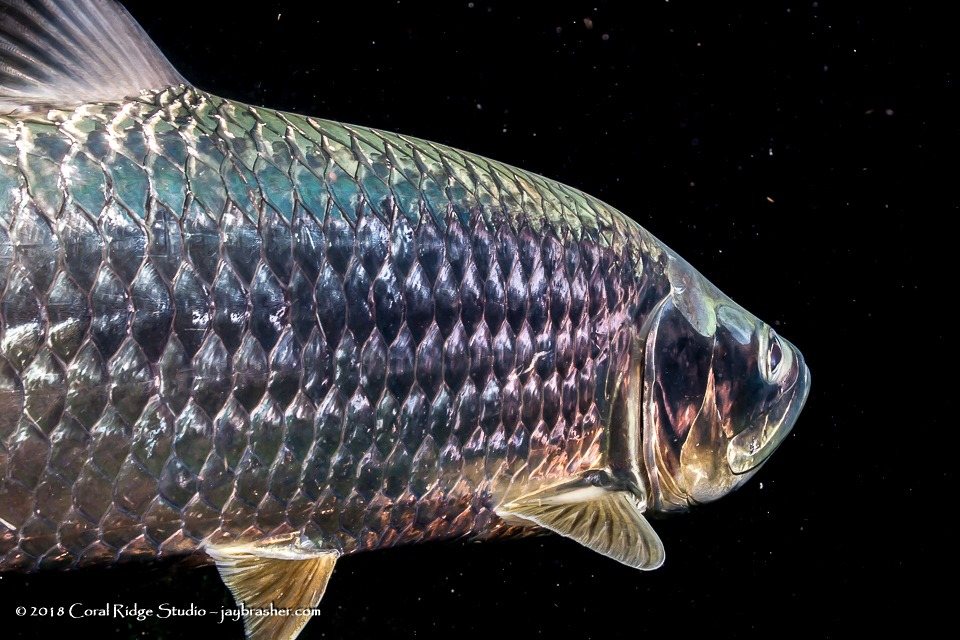
Large scales, an upward-facing mouth and a long filament extending from the last dorsal-fin ray distinguish this silver fish.
- Physical appearance
The body is compressed from side to side, with a darker back and a deeply forked tail.
- Typical size
30–100 lb adults; 5–30 lb "baby tarpon" in canals and mangroves.
- Maximum size
Over 8 ft and 280 lb.
- Diet
Fish and large crustaceans.
- Behavior
Can breathe air with a modified swim bladder and is often noticed rolling at the surface. Juveniles tolerate low-oxygen pools.
Find it
Where, when and how deep to look.
- Where to find it
Found in Puerto Rico. Start in coastal channels, flats, beaches, sand/grass edges, passes or estuary mouths that match the species habitat, especially where current concentrates bait. Habitat reference: Estuaries and coastal waters are important for large fish. Juveniles use mangrove pools and can occupy freshwater; spawning occurs offshore.
- Habitat
Estuaries and coastal waters are important for large fish. Juveniles use mangrove pools and can occupy freshwater; spawning occurs offshore.
- Depth
Primarily shallow coastal, beach, estuary, flat or channel habitat; deeper channels and drop-offs may hold larger fish.
- Fishing depth
Release-first species on this BigJoe guide: do not target it for harvest. If caught incidentally, release promptly in the water or with minimal air exposure.
- Fishing environments
Shore-accessible coastal, inshore, mangrove and freshwater habitats occur in its life cycle; adults also use offshore spawning waters. Shore access does not ensure safe landing or legal targeting.
- Best season
FAO contrasts mid-May–mid-August spawning off Florida with year-round spawning off Costa Rica. There is no single Caribbean season in this evidence.
- Best time
No target time is recommended; release any incidental capture promptly.
- Best tides
No target tide is recommended; choose conditions that allow safe handling and release.
- Best weather / conditions
Choose sea state, wind and visibility that let you hold position and handle the fish safely. Avoid treating rough weather as a feeding advantage.
Bait & gear
What to tie on and what to throw.
- Best bait
Live crabs, mullet, pinfish, threadfin herring and large shrimp.
- Best artificial lures
Swimbaits, soft-plastic jerkbaits, plugs and flies; small jigs for baby tarpon.
- Tackle setup
Use tackle strong enough to shorten the fight; large tarpon require different gear from juveniles.
- Hook size
For natural bait, FWC recommends a single non-offset, non-stainless circle hook with the barb removed. Size must fit the bait and fish.
- Line
20–50 lb line is a common tarpon starting range depending on fish size and structure.
- Leader
A strong monofilament leader helps resist contact with the gill plate and tail.
BigJoe's setup for Atlantic tarpon
The rod, reel, line and lures BigJoe would use.
As an Amazon Associate, BigJoe earns from qualifying purchases. It costs you nothing extra and helps keep this guide free.
Catch it
Step by step, from first cast to landing.
Step-by-step: how to catch it
- Start where the species is most likely to occur: Estuaries and coastal waters are important for large fish. Juveniles use mangrove pools and can occupy freshwater; spawning occurs offshore.
- Rig for the habitat and current: A documented regional tarpon option is a live-line/live-bait rig using main line, leader, a circle hook and live bait without added weight. Component strength and size must match the fish and local rules.
- Choose an offering that matches the fish and situation. Natural bait: Live crabs, mullet, pinfish, threadfin herring and large shrimp. Lures/alternatives: Swimbaits, soft-plastic jerkbaits, plugs and flies; small jigs for baby tarpon.
- Fish it with this starting approach: Drift or anchor near passes, bridges and beaches where tarpon roll; use a circle hook, bow to the fish when it jumps, and keep big fish in the water. Presentation: Suspend live bait naturally in the water column with a weightless live-line presentation. This is regional FWC guidance, not a Puerto Rico guarantee.
- Use timing and water movement as adjustments, not guarantees. Time: No target time is recommended; release any incidental capture promptly. Tide/current: No target tide is recommended; choose conditions that allow safe handling and release.
- Fishing techniques
Drift or anchor near passes, bridges and beaches where tarpon roll; use a circle hook, bow to the fish when it jumps, and keep big fish in the water.
- Catch and release
Keep large fish in the water. Use a dehooker or cut the leader near the hook; minimize handling and release promptly.
Clean & cook
Is it good to eat, and how to prepare it.
- Edibility
Usually released — a sport fish more than a food fish. In Florida tarpon are catch-and-release (a special tag is needed to keep one for a record).
- Table quality
Most anglers don't keep it for the table.
- Cleaning
Not provided: this guide is oriented toward release.
- Cooking suggestions
Not provided: this guide is oriented toward release.
Stay safe & legal
Safety, rules and taking care of the fishery.
- Safety warnings
If sharks begin taking hooked tarpon, stop fishing that location. Do not drag a fish onto a bridge or over a boat rail.
- Regulations
Rules: Tarpon — release only: Puerto Rico territorial rule: release-only or prohibited as listed by DRNA. Do not retain.
- Conservation
Protect mangrove nurseries. FAO reports that tarpon can live more than 50 years; survival after release matters.
Where it's found & local rules
Tap an island for local spots and rules.
Sources & photo credits
Sources
- BigJoe Caribbean species list and local rule sources
- FAO Western Central Atlantic, volume 2, PDF pages 89, 90
- FWC — Tarpon profile
- FWC — Tarpon best fishing practices (Florida rules separately scoped)
- Common Caribbean fishing know-how — a good starting point, not a legal rule.
- Smithsonian STRI Shorefishes of the Greater Caribbean — Caribbean biology reference system used for cross-checking.
- NOAA Fisheries — current U.S. Caribbean rules/closures · Puerto Rico DRNA — current territorial rules
- FishBase — Megalops atlanticus species record
- FDA — Selecting and serving fresh and frozen seafood safely
- FWC Fishing Lines Field Guide — Live-Lining or Live Bait Rig
Other names: No synonyms recorded.
Tips marked as common know-how come from everyday Caribbean fishing. They're a starting point — not a safety check, a permit or a guaranteed catch.