
Octopus & Squid
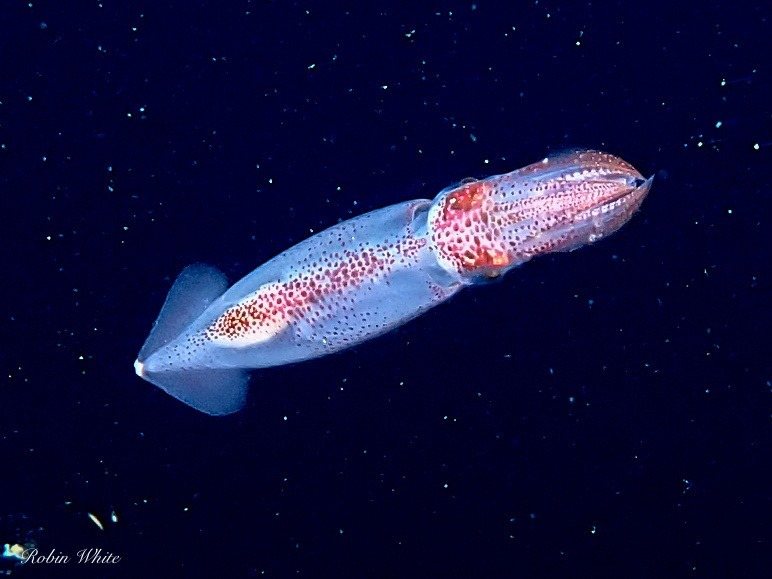
Western Atlantic brief squid
Calamar dedal
Lolliguncula brevis
At a glance
Most squid in this guide are small to medium cephalopods, commonly mantles of several inches to about 1 ft.
Commonly associated with reef, rubble, seagrass or nearby bottom habitat; exact depth varies by species and life stage.
Night around lights and low-light periods are common squid windows.
3 Caribbean areas
Know it
Spot it, size it up and learn its habits.
- Identification
Western Atlantic brief squid (Lolliguncula brevis) — field identification starting point: a streamlined cephalopod with a muscular mantle, eight arms and two longer feeding tentacles in typical squid. Confirm the exact species against the approved photo and scientific-name biology reference.
- Typical size
Most squid in this guide are small to medium cephalopods, commonly mantles of several inches to about 1 ft.
- Maximum size
Large species can exceed 1 ft mantle length.
- Diet
Predatory on small fish, shrimp and other small marine animals.
- Behavior
Often forms loose groups and uses rapid color changes; many feed actively in low light and around bait concentrations.
Find it
Where, when and how deep to look.
- Where to find it
Found in Puerto Rico. Start in the documented habitat and substrate for this species, then narrow the search using depth, current, structure and food activity. Habitat reference: Habitat: estuary and coastal waters.
- Habitat
Habitat: estuary and coastal waters.
- Depth
Commonly associated with reef, rubble, seagrass or nearby bottom habitat; exact depth varies by species and life stage.
- Fishing depth
Start near the bottom or reef edge where the species is observed; adjust until bites show the active level.
- Fishing environments
Water: marine. Habitat: estuary and coastal waters.
- Best season
Fish legal open periods and favorable sea conditions; no single month works for every reef species.
- Best time
Night around lights and low-light periods are common squid windows.
- Best tides
Moderate moving water is often productive; excessive current may require more weight or a sheltered edge.
- Best weather / conditions
Choose sea state, wind and visibility that let you hold position and handle the fish safely. Avoid treating rough weather as a feeding advantage.
Bait & gear
What to tie on and what to throw.
- Best bait
Small baitfish can be used on specialized squid rigs, but squid jigs are the common clean starting method.
- Best artificial lures
Squid jigs/egi in sizes matched to the squid and current are the standard starting lure.
- Tackle setup
Light spinning rod, 8–12 lb line, 12–20 lb leader and a squid jig matched to depth/current.
- Hook size
Use the crown hooks built into a squid jig rather than a conventional fish hook.
- Line
8–15 lb braid/mono with a light leader is a common start.
- Leader
10–20 lb clear mono/fluoro is a common start.
BigJoe's setup for Western Atlantic brief squid
What BigJoe would use to jig up squid.
As an Amazon Associate, BigJoe earns from qualifying purchases. It costs you nothing extra and helps keep this guide free.
Catch it
Step by step, from first cast to landing.
Step-by-step: how to catch it
- Start where the species is most likely to occur: Habitat: estuary and coastal waters.
- Rig for the habitat and current: Single or tandem squid-jig rig; add only enough weight to reach the squid.
- Choose an offering that matches the fish and situation. Natural bait: Small baitfish can be used on specialized squid rigs, but squid jigs are the common clean starting method. Lures/alternatives: Squid jigs/egi in sizes matched to the squid and current are the standard starting lure.
- Fish it with this starting approach: Cast or vertical-jig around lights, reef edges and bait; lift sharply, pause and let the jig sink under control. Presentation: Use small natural offerings and subtle jig movements; pause often near cover.
- Use timing and water movement as adjustments, not guarantees. Time: Night around lights and low-light periods are common squid windows. Tide/current: Moderate moving water is often productive; excessive current may require more weight or a sheltered edge.
- Fishing techniques
Cast or vertical-jig around lights, reef edges and bait; lift sharply, pause and let the jig sink under control.
- Catch and release
Let it go quickly if you're not keeping it.
Clean & cook
Is it good to eat, and how to prepare it.
- Edibility
Good eating — a common food fish where it's caught.
- Table quality
Good table fare when bled, iced and cooked fresh.
- Cleaning
After legal-retention and food-use confirmation, chill promptly. For cephalopods, remove viscera and beak; for squid also remove the internal pen and skin if desired. Rinse with clean water, portion on a sanitized surface and refrigerate immediately.
- Cooking suggestions
Cook cephalopods thoroughly unless using a validated raw-seafood control program. Quick high heat keeps squid tender, while octopus is often tenderized and then simmered, braised or grilled; exact technique is culinary, not a safety substitute.
Stay safe & legal
Safety, rules and taking care of the fishery.
- Safety warnings
Keep fingers away from the beak; ink and slippery surfaces can make handling difficult. Use a container and rinse deck/gear.
- Regulations
No species-specific size, bag or season limits are listed here.
- Conservation
Avoid needless kills and follow protected-species, area and season rules.
Where it's found & local rules
Tap an island for local spots and rules.
Sources & photo credits
Sources
- BigJoe Caribbean species list and local rule sources
- Puerto Rico rules — based on DRNA and NOAA sources
- Common Caribbean fishing know-how — a good starting point, not a legal rule.
- Smithsonian STRI Shorefishes of the Greater Caribbean — Caribbean biology reference system used for cross-checking.
- NOAA Fisheries — current U.S. Caribbean rules/closures · Puerto Rico DRNA — current territorial rules
- SeaLifeBase — Lolliguncula brevis species record
- FDA — Selecting and serving fresh and frozen seafood safely
Other names: No synonyms recorded.
Tips marked as common know-how come from everyday Caribbean fishing. They're a starting point — not a safety check, a permit or a guaranteed catch.