
Freshwater
Brown trout
Trucha marrón (trucha común)
Salmo trutta
At a glance
12–20 in in rivers; sea-run fish in Patagonia 10–20 lb.
1–10 ft in rivers; near shore and river mouths in lakes.
Morning and evening; overcast days fish well all day.
3 areas
Know it
Spot it, size it up and learn its habits.
- Identification
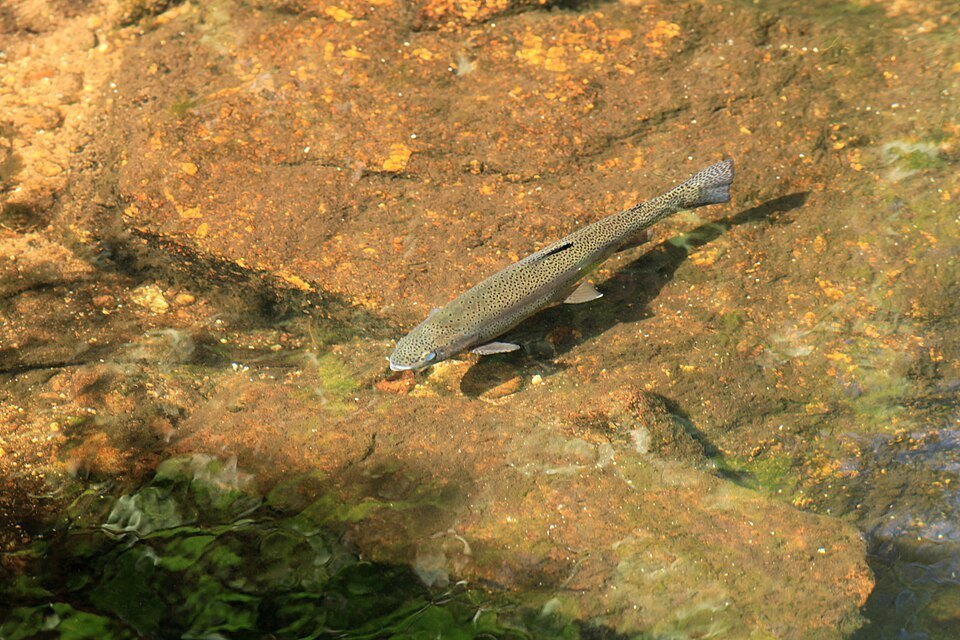
Golden-brown to silver trout with large black spots and red or orange spots ringed with pale halos on the sides, and few or no spots on the square tail. Sea-run fish are silver with black X-shaped spots.
- Typical size
12–20 in in rivers; sea-run fish in Patagonia 10–20 lb.
- Maximum size
Over 3 ft and more than 40 lb.
- Diet
Insects, salmon eggs and flesh, sculpins, smolts, leeches and small fish.
- Behavior
River and lake fish that hold behind rocks, at the tail of pools and along seams where slow water meets fast water. In salmon country they follow the spawning salmon to eat their eggs.
Find it
Where, when and how deep to look.
- Where to find it
Found from Patagonia, Ontario Great Lakes and Canadian Prairies. Brought from Europe and now wild in rivers and lakes worldwide. Tierra del Fuego's Río Grande has some of the biggest sea-run browns on Earth; they're also stocked in Lake Ontario and wild in Alberta's Bow River.
- Habitat
Brought from Europe and now wild in rivers and lakes worldwide. Tierra del Fuego's Río Grande has some of the biggest sea-run browns on Earth; they're also stocked in Lake Ontario and wild in Alberta's Bow River.
- Depth
1–10 ft in rivers; near shore and river mouths in lakes.
- Fishing depth
1–8 ft in rivers; drop-offs and inlets of lakes.
- Best season
Spring after ice-out, and late summer through fall when the salmon are spawning.
- Best time
Morning and evening; overcast days fish well all day.
- Best tides
No tide — in rivers, steady or slowly dropping water is best.
- Best weather / conditions
Cloudy, cool days; avoid high, muddy water after heavy rain.
Bait & gear
What to tie on and what to throw.
- Best bait
Worms and minnows where legal.
- Best artificial lures
Streamers, nymphs, dry flies, spinners, spoons and stickbaits.
- Tackle setup
9 ft 5–7 weight fly rod, or a 6½–7 ft light to medium-light spinning rod.
- Hook size
Size 6–14 flies; single barbless hooks on spinners and spoons where required.
- Line
4–10 lb mono, or floating fly line.
- Leader
3X–5X tippet (4–8 lb), 7½–9 ft.
BigJoe's setup for Brown trout
The rod, reel, line and lures BigJoe would use.
As an Amazon Associate, BigJoe earns from qualifying purchases. It costs you nothing extra and helps keep this guide free.
Catch it
Step by step, from first cast to landing.
Step-by-step: how to catch it
- Go where it lives: Brought from Europe and now wild in rivers and lakes worldwide. Tierra del Fuego's Río Grande has some of the biggest sea-run browns on Earth; they're also stocked in Lake Ontario and wild in Alberta's Bow River.
- Rig up: 9 ft 5–7 weight fly rod, or a 6½–7 ft light to medium-light spinning rod. 3X–5X tippet (4–8 lb), 7½–9 ft.
- Pick your bait: Worms and minnows where legal. Lures: Streamers, nymphs, dry flies, spinners, spoons and stickbaits.
- Fish it: Swing big streamers through deep pools at dawn and dusk, or nymph the riffles. On Lake Ontario, cast spoons from piers in spring and fall.
- Time it: Morning and evening; overcast days fish well all day. No tide — in rivers, steady or slowly dropping water is best.
- Fishing techniques
Swing big streamers through deep pools at dawn and dusk, or nymph the riffles. On Lake Ontario, cast spoons from piers in spring and fall.
- BigJoe's tip
Big browns hunt at night and in low light. Fish the first and last hour of the day with a big streamer.
- Catch and release
Catch and release: wet your hands, keep the fish in the water when you can, and release it quickly. Use circle hooks and a dehooker.
Clean & cook
Is it good to eat, and how to prepare it.
- Edibility
Good eating when fresh.
- Cleaning
Bleed and ice it right away. Fillet, then remove the skin and any dark bloodline.
- Cooking suggestions
Good pan-fried or smoked, but most wild browns are released.
Stay safe & legal
Safety, rules and taking care of the fishery.
- Safety warnings
Cold, fast rivers — wear a wading belt and a life jacket in boats, and in Alaska and northern Canada carry bear spray and make noise.
- Regulations
Argentina and Chile each require their own license, and many Patagonian rivers, including the Río Grande, are fly-only and catch-and-release. Ontario and Alberta have their own seasons and limits. Licenses, limits and seasons are set by each province, territory or state, and many lakes and rivers have special size limits, slot limits or closed spawning seasons — check the current regulations for the water you fish.
- Conservation
Keep only what you'll eat, release the rest quickly, and follow size and bag limits.