
At a glance
2–8 lb.
5–100 ft.
Daylight.
3 areas
Know it
Spot it, size it up and learn its habits.
- Identification
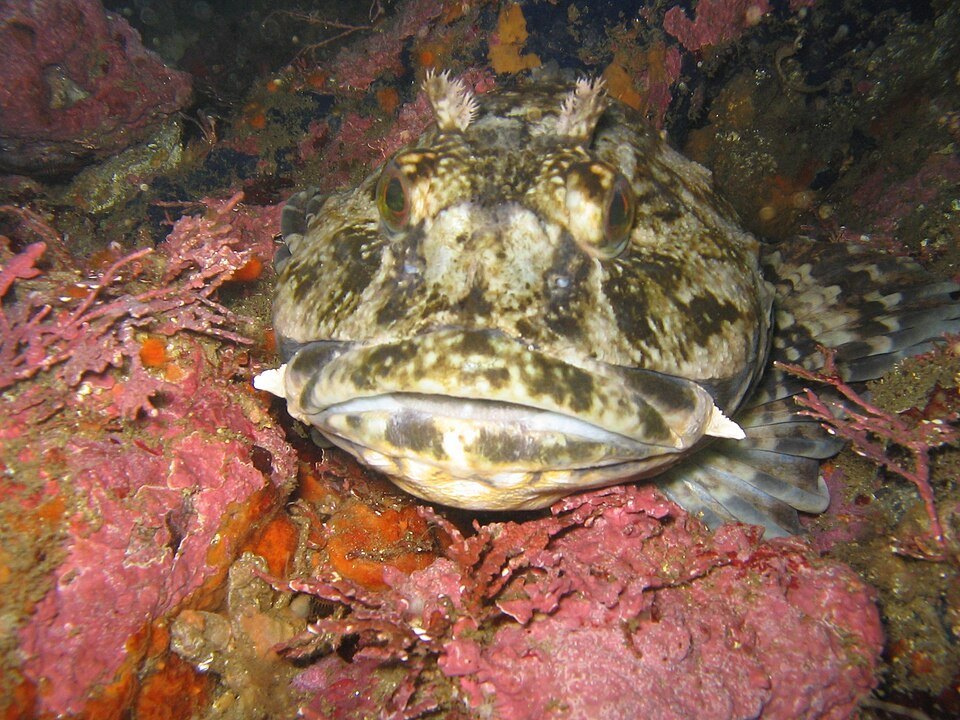
Big, heavy sculpin with a huge head, wide mouth, no scales, a fleshy flap over each eye and mottled red, brown or green skin.
- Typical size
2–8 lb.
- Maximum size
About 3 ft and 25 lb.
- Diet
Small fish, crabs, shrimp, squid, octopus and other rockfish.
- Behavior
Lives on rocky reefs, pinnacles and kelp; most stay close to the bottom near cover.
Find it
Where, when and how deep to look.
- Where to find it
Found from Southern California, Central & Northern California and Oregon & Washington. Rocky shore, tide pools, jetties and shallow reefs from Baja to Alaska.
- Habitat
Rocky shore, tide pools, jetties and shallow reefs from Baja to Alaska.
- Depth
5–100 ft.
- Fishing depth
20–200 ft on rocky bottom; where depth limits apply you may only fish shallower than the line.
- Best season
When the season is open — rockfish and lingcod seasons and depth limits are set each year by each state.
- Best time
Daylight.
- Best tides
Light current so the boat drifts slowly over the reef.
- Best weather / conditions
Calm seas — this is open-ocean fishing on an often rough coast.
Bait & gear
What to tie on and what to throw.
- Best bait
Crabs, shrimp, squid and mussels.
- Best artificial lures
Jigs and grubs bounced slowly on the rocks.
- Tackle setup
Medium-heavy 7 ft rod with a conventional or large spinning reel.
- Hook size
Shrimp-fly rigs, 2/0–6/0 hooks, and 4–12 oz jigs.
- Line
30–50 lb braid.
- Leader
30–50 lb mono.
BigJoe's setup for Cabezon
The rod, reel, line and lures BigJoe would use.
As an Amazon Associate, BigJoe earns from qualifying purchases. It costs you nothing extra and helps keep this guide free.
Catch it
Step by step, from first cast to landing.
Step-by-step: how to catch it
- Go where it lives: Rocky shore, tide pools, jetties and shallow reefs from Baja to Alaska.
- Rig up: Medium-heavy 7 ft rod with a conventional or large spinning reel. 30–50 lb mono.
- Pick your bait: Crabs, shrimp, squid and mussels. Lures: Jigs and grubs bounced slowly on the rocks.
- Fish it: Fish crab or squid right on the rocky bottom from shore or a boat, and pull it away from the rocks fast.
- Time it: Daylight. Light current so the boat drifts slowly over the reef.
- Fishing techniques
Fish crab or squid right on the rocky bottom from shore or a boat, and pull it away from the rocks fast.
- BigJoe's tip
Never eat cabezon eggs — the roe is poisonous.
- Catch and release
Catch and release: wet your hands, keep the fish in the water when you can, and release it quickly. Use circle hooks and a dehooker.
Clean & cook
Is it good to eat, and how to prepare it.
- Edibility
Good eating when fresh.
- Cleaning
Bleed and ice it right away. Fillet, then remove the skin and any dark bloodline.
- Cooking suggestions
The meat can look blue-green raw but turns white when cooked; firm and tasty fried or in chowder. Do not eat the roe.
Stay safe & legal
Safety, rules and taking care of the fishery.
- Safety warnings
Venomous-feeling dorsal spines on rockfish; fish brought up from deep water can get barotrauma — use a descending device to release them.
- Regulations
Each state sets a size and bag limit and season for cabezon. Check CDFW, ODFW or WDFW. Licenses, size and bag limits and seasons are set by each state — the California Department of Fish and Wildlife (wildlife.ca.gov), Oregon Department of Fish and Wildlife (myodfw.com) and Washington Department of Fish and Wildlife (wdfw.wa.gov) — together with NOAA Fisheries and the Pacific Fishery Management Council. Rules change often, and many areas are no-take marine reserves: check before you go.
- Conservation
Keep only what you'll eat, release the rest quickly, and follow size and bag limits.
Where it's found
Tap an area to open its fishing map.