
At a glance
1–3 lb.
30–300 ft.
Daylight fishing is fine; dawn and dusk are often better.
4 areas
Know it
Spot it, size it up and learn its habits.
- Identification
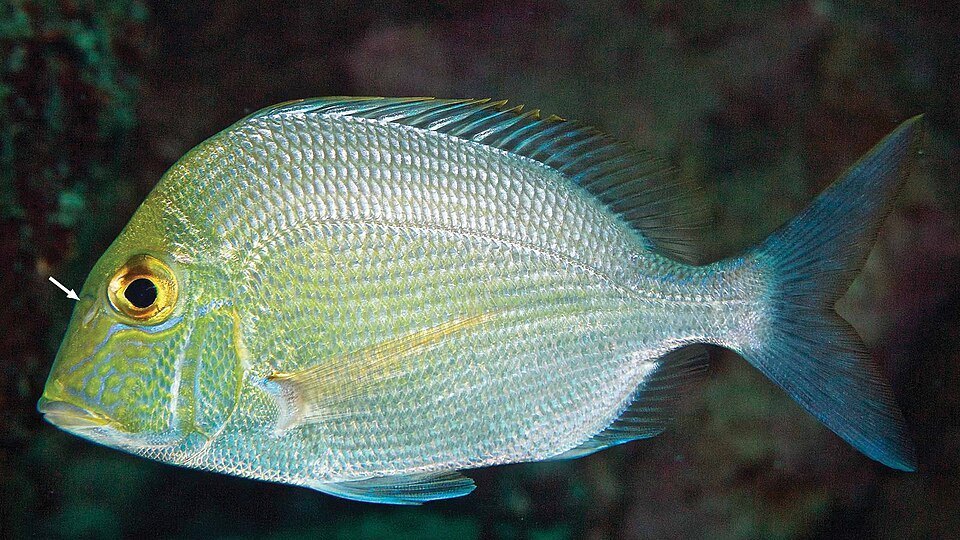
Deep-bodied silver porgy with a bump (knob) in front of the eyes and a blue line under the eye.
- Typical size
1–3 lb.
- Maximum size
About 2 ft.
- Diet
Fish, squid, crabs and shrimp living around reefs, ledges and wrecks.
- Behavior
Holds tight to rock, ledges and wrecks and dives back into cover when hooked.
Find it
Where, when and how deep to look.
- Where to find it
Found from Florida Atlantic Coast, Florida Gulf Coast, Northern Gulf (AL–TX) and Mexico Gulf Coast. Hard bottom and reefs.
- Habitat
Hard bottom and reefs.
- Depth
30–300 ft.
- Fishing depth
Fish near the bottom over the structure; use enough weight to hold bottom in the current.
- Best season
Caught all year, but federal and state seasons often limit when you can keep it.
- Best time
Daylight fishing is fine; dawn and dusk are often better.
- Best tides
A moderate current makes fish feed; slack water slows the bite.
- Best weather / conditions
Pick calm days you can safely anchor or drift over structure.
Bait & gear
What to tie on and what to throw.
- Best bait
Squid, shrimp and cut fish.
- Best artificial lures
Small jigs.
- Tackle setup
Medium-heavy to heavy conventional rod with a 30–50 lb class reel.
- Hook size
4/0–8/0 circle hooks (circle hooks are required for reef fish in Gulf federal waters).
- Line
40–65 lb braid.
- Leader
50–80 lb fluorocarbon.
BigJoe's setup for Knobbed porgy
The rod, reel, line and lures BigJoe would use.
As an Amazon Associate, BigJoe earns from qualifying purchases. It costs you nothing extra and helps keep this guide free.
Catch it
Step by step, from first cast to landing.
Step-by-step: how to catch it
- Go where it lives: Hard bottom and reefs.
- Rig up: Medium-heavy to heavy conventional rod with a 30–50 lb class reel. 50–80 lb fluorocarbon.
- Pick your bait: Squid, shrimp and cut fish. Lures: Small jigs.
- Fish it: Bottom rig over rocky patches.
- Time it: Daylight fishing is fine; dawn and dusk are often better. A moderate current makes fish feed; slack water slows the bite.
- Fishing techniques
Bottom rig over rocky patches.
- BigJoe's tip
Thick white fillets — great fried whole or scored and grilled.
- Catch and release
Catch and release: wet your hands, keep the fish in the water when you can, and release it quickly. Use circle hooks and a dehooker.
Clean & cook
Is it good to eat, and how to prepare it.
- Edibility
Good eating when fresh.
- Cleaning
Bleed and ice it right away. Fillet, then remove the skin and any dark bloodline.
- Cooking suggestions
Cook fish to 145°F (63°C) — the flesh turns opaque and flakes easily. Fry, grill, bake or blacken.
Stay safe & legal
Safety, rules and taking care of the fishery.
- Safety warnings
Sharp gill covers and fin spines; use a descending device or venting tool to release fish caught deep (required in federal waters).
- Regulations
Check FWC/NOAA porgy rules. A Florida fishing license is required unless you are exempt; Florida rules are set by FWC (myfwc.com). Federal waters fall under NOAA Fisheries. Other states and countries set their own limits — check before you keep fish.
- Conservation
Keep only what you'll eat, release the rest quickly, and follow size and bag limits.
Where it's found
Tap an area to open its fishing map.